Pull up four different real estate sites this week and ask each one what a home in Midwest City costs. You will get four different answers, and the spread is wider than a full year of appreciation in most Oklahoma City suburbs. Zillow's index sits at about $158,812. Redfin logged a $180,000 median sale price in October 2025. A local brokerage puts the 2026 number closer to $207,000. MyBaseGuide, tracking homes near the Tinker gates, splits the difference at $177,731.
The instinct is to average them and move on. That is a mistake, because the gap between those numbers is the story, and once you see why they disagree, you also see what your money actually buys within a few blocks of Tinker Air Force Base right now.
Four "Medians" That Are Measuring Four Different Things
Here is the spread, side by side, so you can see the mechanics.
| Source | Figure | What it actually measures | As of |
|---|---|---|---|
| Zillow ZHVI | $158,812 | Modeled value across the whole housing stock, including homes that never listed | June 2026 |
| Redfin | $180,000 | Median of homes that actually closed last month | Oct 2025 |
| MyBaseGuide | $177,731 | Median home value in ZIPs closest to the base | Jan 2026 |
| Local brokerage estimate | ~$207,000 | Snapshot of active market inventory in 2026 | 2026 |
None of these are wrong. They are answering different questions. The Zillow index captures the vast pool of older, smaller homes built when Midwest City "grew up alongside Tinker" after 1942, most of which never trade in a given year. The Redfin closed-sale median tells you what the homes that sold last month actually fetched. The active-inventory figure is higher because what is for sale right now skews toward updated or larger homes, not the full stock.
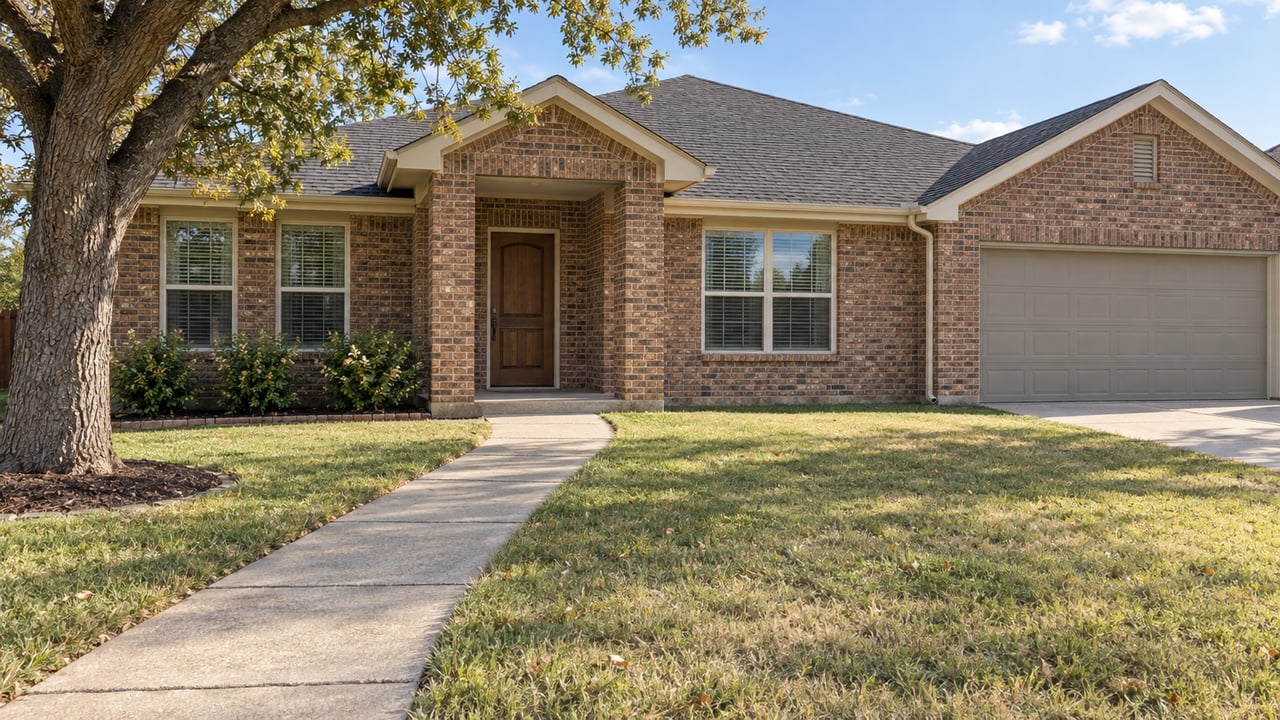
For a buyer, the number that matters is the one attached to the specific house you want. If you are shopping the older grid inside the Original Square Mile, the Zillow-style figure is closer to reality. If you are targeting an updated three-bed with a newer roof, expect to pay closer to the active-inventory number, or more.
Why This Gap Matters More in Midwest City Than Anywhere Else in the Metro
Oklahoma City itself is running a median closed price around $229,900 across roughly 2,844 sales over the past six months, with the middle half of sales landing between $152,000 and $320,000. That is a big range, but it is a big city. Midwest City sits inside a much tighter 25 square miles, and its price band is compressed almost entirely at the low end of the metro.
That compression exists for one reason: the community was founded in 1941 on speculation that a military airfield was coming, and most of its residential fabric was laid down in the two decades that followed. The result is a housing stock that is older and closer together than what most three-year military tours prefer, especially in the blocks nearest the Tinker Main Gate on Air Depot Boulevard.
Here is the mechanism nobody explains until you are already under contract:
When a market's median is anchored by 1950s and 1960s ranches, the sticker price includes a lot of deferred maintenance the median doesn't capture. Your BAH covers the payment. It doesn't cover the roof.
For 2026, an E-5 with dependents at Tinker draws $1,644 per month in BAH, an E-6 with dependents draws $1,854, and an O-3 with dependents draws $1,974. Tinker's rates rose only 1.5% this year against a 4.2% national average, which is a direct reflection of OKC's rents staying flat rather than a signal that housing costs stopped moving. Nationally that would sting. Here it barely registers, because the median mortgage payment on a $180,000 home with a VA loan sits well inside those allowances.
The allowance math is the easy part. The friction is what happens between the offer and the closing table.
Gate Math vs. School-District Math
Every Tinker buyer eventually runs the same calculation, and it usually goes wrong the first time. The choice is not "where do I want to live." The choice is "which gate am I willing to sit at for the next thirty-six months."
Homes near the Tinker Main Gate and Lancer Gate in Midwest City proper deliver a 5-to-10-minute commute and the metro's most accessible price point. You are inside the Mid-Del School District, which feeds Tinker Elementary, Jarman Middle School, and Midwest City High School. The housing stock is one-story resale, generally 1,500 to 2,200 square feet, with a smaller pocket of newer builds east of the base. Home Creations' Aspen Ridge community, sitting north of SE 29th Street and west of Westminster Road, is where most of the recent inventory is going up with easy Lancer Gate access.
Push the commute to twenty or twenty-five minutes and the math changes shape. Moore's northwest quadrant, closest to I-240, gives you three- and four-bedroom new construction in the $240,000 to $280,000 range, still comfortably inside E-6 BAH with a VA loan. Head to Edmond and the commute climbs to 25-35 minutes but the housing stock is dramatically newer.
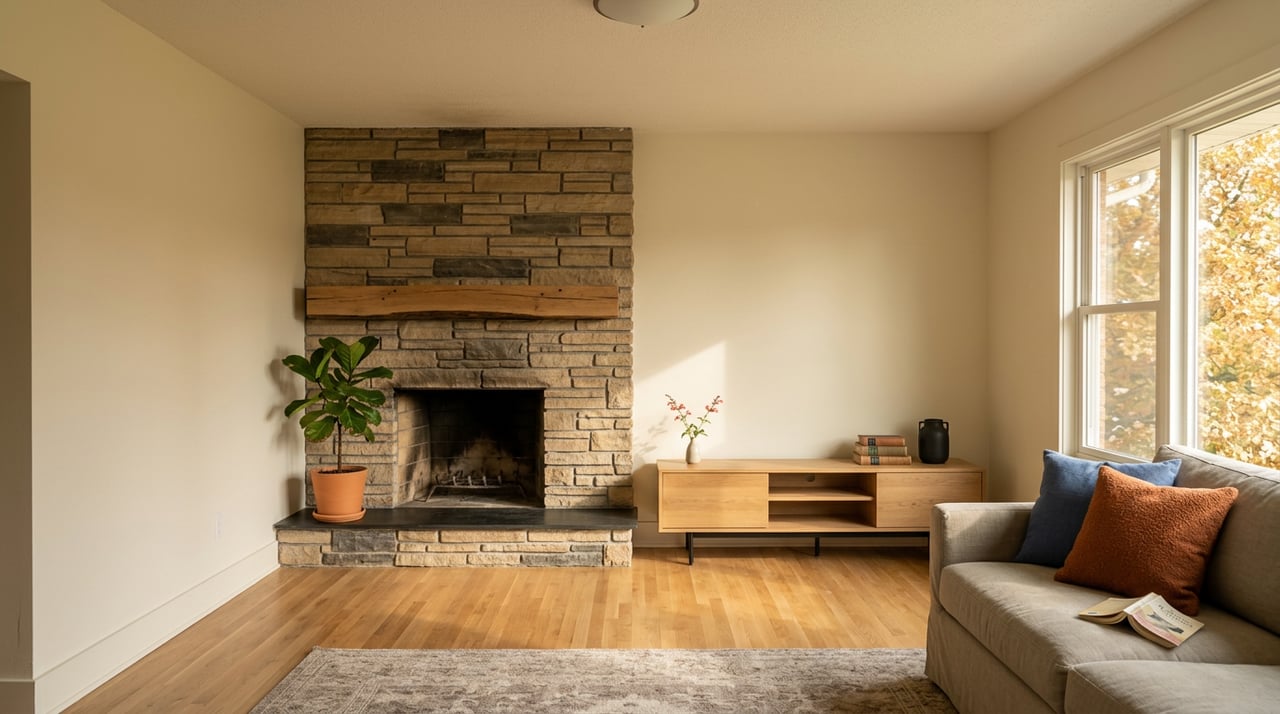
The trade to name explicitly: the closer you buy to the base, the older the roof, the older the HVAC, and the more likely a VA appraiser is going to flag something. That is not a Midwest City problem. That is a "buying a 60-year-old house" problem, and Midwest City has a lot of 60-year-old houses.
The Plaza 62 Wildcard
There is one active local variable that is going to reshape which pockets of Midwest City hold value over the next five years, and most out-of-state buyers arrive with no idea it exists.
Plaza 62 is a $31 million redevelopment centered on the SSM Health St. Anthony Hospital campus, running along Parklawn Drive and National Avenue. Construction closures in the project area began affecting hospital access on June 22, 2026, and full completion is scheduled for late 2027. The city acquired multiple aging buildings from the late 1970s and early 1980s and is demolishing them to make room for a modern connected district. City officials expect the work to attract private investment nearby before the public work even finishes.
If you are shopping resale within a half-mile of Parklawn and National, this matters twice. Once because construction traffic is real between now and 2027. And once because homes on the perimeter of a fresh $31 million public investment tend to hold value better than homes that don't have one down the street.
The city is also working on Carburetor Alley in the Original Square Mile, the 23rd Street corridor, and Sentinel Square at 29th and Douglas. These are worth watching if you are choosing between two otherwise identical houses on different sides of town.
Where the Sticker Price Breaks at Closing
Older stock, VA financing, and Oklahoma weather combine into a specific set of surprises. These are the line items that eat the "we saved money buying in Midwest City" narrative if you don't price them into your offer.
- HVAC age. Oklahoma summers are punishing, and a system past year twelve is a repair-or-replace conversation, not a "runs fine" conversation. A VA appraiser will not necessarily flag it, but your inspector should.
- Roof condition. Wind and hail claims are common enough that insurers pay close attention here. A roof approaching the end of its useful life can lengthen your appraisal timeline or trigger a repair requirement before funding.
- Storm hardening. Reinforced garages, tornado shelters, and impact-rated openings are not standard on 1960s stock. Adding them post-purchase runs into real money.
- Foundation and drainage. Older neighborhoods have older grading. Walk the perimeter after a rain if you can time it.
- Sewer line age. Cast iron and clay laterals from the mid-century era are a real inspection add-on, not a paranoid one.
None of this is unique to buying near Tinker. All of it hits harder when the median price makes the deal look easier than it is.
A Few Questions Buyers Actually Ask
Does the older housing stock mean I should skip Midwest City and go straight to Moore or Edmond? Not automatically. If you value a five-minute commute and want to own rather than rent on lower-enlisted BAH, Midwest City is the only address in the metro that math works at cleanly. If your kids are middle-school or older and school fit ranks above commute, the extra minutes to Moore, Norman, or Edmond may earn themselves back.
Can I use my gaining-station BAH to qualify before I get to Oklahoma? Usually yes, with valid PCS orders in hand. Lenders can typically qualify you on Tinker BAH from your losing station, which matters if you want to close near your report date.
How fast is the market moving right now? Homes in the communities closest to Tinker have been trading in roughly 27 to 35 days. Statewide, Oklahoma sits around 51 days on market with a 3.5-month supply, so Midwest City is running tighter than the state as a whole, which is what you would expect for a base-adjacent market.
Ready to Price a Specific Address, Not a Median?
The median is a map, not a house. If you want to know what a specific street inside the Lancer Gate or a specific floor plan in Aspen Ridge will actually cost you between offer and closing, that is a conversation, not a portal search. The House Collective Group works with military and civilian buyers across the OKC metro every week, and we are happy to run the real numbers on your rank, your BAH, and the specific corner of Midwest City you are eyeing.
Let's Connect.